Delegated and Derailed: How Power of Attorney Misuse Unravels South Carolina Vehicle Transfers
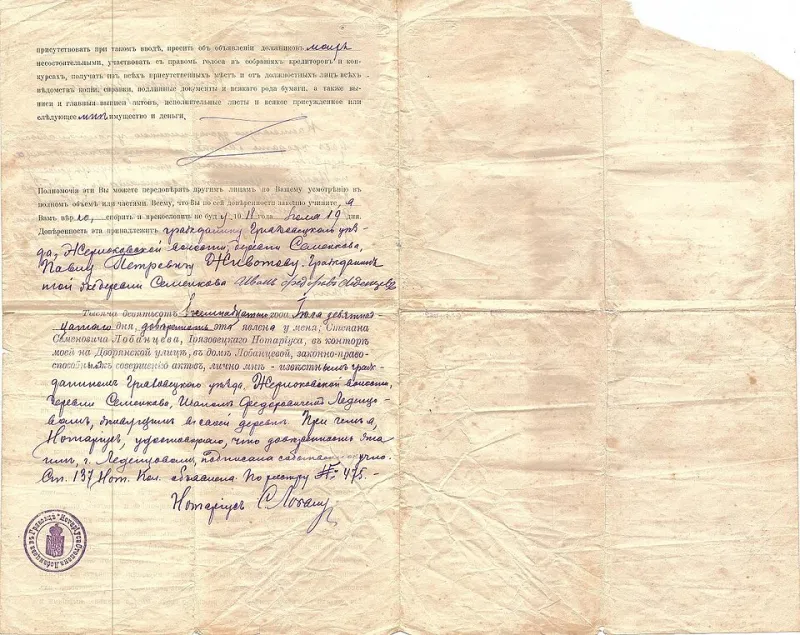
Photo: Грязовецкий нотариус Степан Семёнович Лобанцев. Scanned by Andrey Zhivotov., Public domain, via Wikimedia Commons
For many South Carolina residents, handing off a vehicle transfer to a trusted representative seems like a reasonable shortcut. A family member handles the paperwork while you recover from surgery. A business partner completes the title work while you travel. A friend finalizes a sale you negotiated remotely. In each of these situations, a power of attorney — commonly abbreviated as POA — appears to be the logical solution.
But delegated authority in vehicle transfers is far more fragile than most people assume. When documentation is flawed, circumstances change unexpectedly, or the agent acts outside the boundaries of what was authorized, the entire transaction can collapse. Worse, the fallout may expose both parties to legal liability, financial penalties, and prolonged compliance delays with South Carolina's vehicle titling system.
What Power of Attorney Actually Authorizes in a Vehicle Transfer
A power of attorney is a legal instrument that grants one individual — the agent — the authority to act on behalf of another — the principal — in specific matters. In the context of South Carolina vehicle transfers, a properly executed POA allows an agent to sign title documents, submit applications to the South Carolina Department of Motor Vehicles, and complete related paperwork that would otherwise require the principal's direct participation.
However, the scope of that authority is not unlimited. A general POA may not be sufficient for vehicle transfer purposes if it does not explicitly reference motor vehicle transactions. South Carolina's DMV, which operates under the broader regulatory framework established by SCDOT, typically requires that a POA used in a title transfer be specific, signed by the principal, and notarized. Documents that fail to meet these criteria are routinely rejected — often after the buyer or seller has already invested significant time and money in the transaction.
Where the Process Most Commonly Breaks Down
The failure points in POA-based vehicle transfers are numerous, and many of them are entirely preventable. Understanding where things go wrong is the first step toward ensuring they do not go wrong for you.
Improper Execution
One of the most frequent sources of rejection is a POA that was not properly notarized. South Carolina requires notarization on title-related POA documents to confirm the identity of the principal and validate the signature. A POA signed in front of a neighbor, a coworker, or even an attorney who did not perform a formal notarial act will not meet the state's evidentiary standard. Similarly, documents that are incomplete — missing dates, addresses, or vehicle-specific information such as the VIN — may be deemed insufficient for processing.
Revocation Without Notice
A power of attorney can be revoked at any time by the principal, provided they are mentally competent to do so. The problem arises when revocation occurs but the agent — and the other parties in the transaction — are not promptly informed. If a vehicle seller revokes a POA after an agent has already initiated a title transfer, the transaction may be legally invalid. The buyer, who acted in good faith, could find themselves holding a vehicle with a contested title and no clear legal recourse without returning to court.
Death or Incapacitation of the Principal
Unless a POA is specifically drafted as "durable," it automatically becomes void upon the principal's death or legal incapacitation. This creates a particularly difficult scenario in estate situations. If a principal passes away between signing the POA and the completion of a vehicle transfer, the agent's authority evaporates — regardless of the agent's intentions. The vehicle then becomes part of the estate, subject to probate proceedings rather than a straightforward title transfer.
Fraudulent Use
Perhaps the most serious scenario involves an agent who acts outside or against the principal's wishes. Forged POA documents, altered vehicle information, or unauthorized sales conducted under a fabricated grant of authority do occur in South Carolina. These situations can leave vehicle owners without their property and without an easy path to recovery. Buyers who unknowingly participate in a fraudulent POA transfer may find their title challenged in court, with the financial consequences falling squarely on their shoulders.
What SCDOT and the South Carolina DMV Require
When a vehicle transfer is conducted using a power of attorney, South Carolina's DMV requires specific documentation to proceed. While requirements can be updated and applicants should always verify current standards directly with the agency, the following elements are generally expected:
- A notarized POA document that explicitly grants authority to conduct motor vehicle transactions
- The vehicle's identification information, including the year, make, model, and VIN, referenced within the POA itself
- The agent's valid government-issued identification at the time of submission
- The original title, properly assigned, or a supporting title application if the original is unavailable
- Any additional forms required by the specific type of transfer — such as an odometer disclosure statement for vehicles under a certain age
Submissions that arrive without notarization or with a POA that appears generic rather than vehicle-specific are among the most commonly flagged for rejection. Processing staff are trained to identify documents that do not meet the evidentiary threshold, and they are not required to accept a deficient POA simply because the agent insists it is valid.
Real-World Scenarios That Should Give You Pause
Consider the situation of a principal who signs a POA before leaving the country for an extended period, intending for their adult child to sell a vehicle on their behalf. If the child later discovers a discrepancy in the title or decides to delay the sale, and the principal cannot be reached for updated instructions, the transaction stalls indefinitely — with the vehicle potentially tied up in paperwork limbo.
Or consider a buyer who purchases a vehicle from an agent acting under POA, only to later discover that the principal had already sold the same vehicle to another party two weeks earlier. Without a properly recorded revocation, the original POA appeared valid. Now two buyers claim ownership of the same vehicle, and the resolution will require legal intervention.
These scenarios are not hypothetical edge cases. They represent the kinds of complications that vehicle transfer professionals encounter with regularity, and they underscore why POA documents deserve the same scrutiny as the title itself.
Protecting Yourself as Either Party
If you are the principal, take the following precautions before executing a vehicle-related power of attorney:
- Use an attorney to draft the document, or at minimum, use a form specifically designed for South Carolina motor vehicle transactions
- Limit the scope of authority to the specific vehicle and transaction at hand
- Set an expiration date on the POA to prevent indefinite or unintended use
- Notify all relevant parties immediately if you revoke the POA for any reason
- Keep copies of both the executed and revoked documents for your records
If you are the agent or the buyer in a POA-based transfer, verify the document's validity before proceeding. Confirm that it has been notarized, that it references the specific vehicle, and that the principal is still living and has not revoked the authority. When in doubt, request direct confirmation from the principal — in writing — before completing any transaction.
The Compliance Cost of Getting It Wrong
Failed or fraudulent POA-based transfers can result in more than inconvenience. South Carolina imposes penalties for late title applications, and if a contested transfer delays the process beyond the allowable window, fees begin to accumulate. In cases involving fraud, criminal charges may be pursued. Civil liability for the agent, the principal, or both parties is also a realistic outcome depending on the circumstances.
Delegated authority, used correctly, is a legitimate and sometimes necessary tool in South Carolina vehicle transfers. Used carelessly — or exploited by bad actors — it becomes one of the most disruptive complications the state's title system encounters. The difference between those two outcomes almost always comes down to documentation, diligence, and a willingness to verify before trusting.